


OR IT COULD BE NPC
You’ve been noticing changes in your child that don’t add up or signs that are becoming harder to explain. If something doesn’t feel right, but you’ve been told to wait, don’t. Waiting and watching can delay answers.1
Ask your doctor about genetic testing for Niemann-Pick type C, or NPC, before more developmental milestones are delayed or lost.1
2 years old, living with infantile-onset NPC, and mom, Mariana.
“HE'LL do it when HE'S ready.”
OR IT COULD BE NPC
You’ve been noticing changes in your child that don’t add up or signs that are becoming harder to explain. If something doesn’t feel right, but you’ve been told to wait, don’t. Waiting and watching can delay answers.1
Ask your doctor about genetic testing for Niemann-Pick type C, or NPC, before more developmental milestones are delayed or lost.
2 years old, living with infantile-onset NPC, and mom, Mariana.
“She’ll do it when She’s ready.”
OR IT COULD BE NPC
You’ve been noticing changes in your child that don’t add up or signs that are becoming harder to explain. If something doesn’t feel right, but you’ve been told to wait, don’t. Waiting and watching can delay answers.1
Ask your doctor about genetic testing for Niemann-Pick type C, or NPC, before more developmental milestones are delayed or lost.1
“She’ll do it when She’s ready.”
Understanding NPC
NPC is a rare, inherited condition that affects the brain, nervous system, and other parts of the body over time. When neurological symptoms begin before age 6, the condition is referred to as infantile-onset NPC. It can show up differently depending on a child’s age.1,2
Signs of NPC in young children may include1-4:
- Inability to move the eyes up and down
- Difficulty moving the eyes up and down quickly (a cardinal sign of NPC)
- Delay or regression in developmental milestones
- Enlarged spleen and/or liver or enlarged spleen alone
- Sudden muscle weakness brought on by emotion or laughter
Could this be NPC?
Use this symptom checklist to help understand whether what you’re seeing could be signs of NPC.
This checklist is meant to help you understand possible symptoms and should not replace guidance from a healthcare provider. It should be used for children experiencing neurological symptoms before 6 years of age.
Which neurological signs have you noticed?
Select any symptoms that your child is experiencing now or has experienced in the past.1,2
Have you noticed any of these early signs?
Some children with NPC experience these signs after birth. Select any that your child has now or has experienced in the past.1
Is there a known family history of NPC in a biological relative?
Confirm if anyone in your family has been diagnosed with NPC.
RESULTS
It may be time to start a conversation.
Based on the signs and symptoms you selected, consider talking with your child's healthcare provider about genetic testing.
NEXT STEPS

Be prepared for the conversation
Use this guide to help prepare for a conversation with your child's healthcare provider about genetic testing.

Find experienced care
A healthcare provider experienced in treating NPC can help guide next steps, answer questions, and support your child’s care.
This checklist is meant to help you understand possible symptoms and should not replace guidance from a healthcare provider. It should be used for children experiencing neurological symptoms before 6 years of age.
NEXT STEPS
Be prepared for the conversation
Use this guide to help prepare for a conversation with your child's healthcare provider about genetic testing.
Find experienced care
A healthcare provider experienced in treating NPC can help guide next steps, answer questions, and support your child’s care.
RESULTS
If you still have concerns, don’t stop asking questions.
The information you shared doesn’t necessarily point to NPC based on this checklist alone. But you still know your child best. If you’re concerned about your child’s symptoms or how they’re changing over time, continue the conversation with your child’s healthcare provider or an NPC specialist.
NEXT STEPS
Find experienced care
A healthcare provider experienced in treating NPC can help guide next steps, answer questions, and support your child’s care.
Be prepared for the conversation
Use this guide to help prepare for a conversation with your child's healthcare provider about genetic testing.
This checklist is meant to help you understand possible symptoms and should not replace guidance from a healthcare provider. It should be used for children experiencing neurological symptoms before 6 years of age.
NEXT STEPS
Find experienced care
A healthcare provider experienced in treating NPC can help guide next steps, answer questions, and support your child’s care.
Be prepared for the conversation
Use this guide to help prepare for a conversation with your child's healthcare provider about genetic testing.

RESULTS
It may be time to start a conversation.
Based on the signs and symptoms you selected, consider talking with your child’s healthcare provider about genetic testing.
NEXT STEPS

Be prepared for the conversation
Use this guide to help prepare a conversation with your child’s healthcare provider about genetic testing.

Access conversation starter

Find experienced care
A healthcare provider experienced in treating NPC can help guide next steps, answer questions, and support your child’s care.

Find a specialist
This checklist is meant to help you understand possible symptoms and should not replace guidance from a healthcare provider. It should be used for children experiencing neurological symptoms before 6 years of age.
©2026 Beren Therapeutics P.B.C. All rights reserved. Beren and Mandos are trademarks of Beren Therapeutics P.B.C. DSA-1620-US-EN-v1 07/2026
RESULTS
If you still have concerns, don’t stop asking questions.
The information you shared doesn’t necessarily point to NPC based on this checklist alone. But you still know your child best. If you’re concerned about your child’s symptoms or how they’re changing over time, continue the conversation with your child’s healthcare provider or an NPC specialist.
NEXT STEPS
Find experienced care
A healthcare provider experienced in treating NPC can help guide next steps, answer questions, and support your child’s care.

Find a specialist
Be prepared for the conversation
Use this guide to help prepare for conversations with your child’s healthcare provider about genetic testing.

Access conversation starter
This checklist is meant to help you understand possible symptoms and should not replace guidance from a healthcare provider. It should be used for children experiencing neurological symptoms before 6 years of age.
©2026 Beren Therapeutics P.B.C. All rights reserved. Beren and Mandos are trademarks of Beren Therapeutics P.B.C. DSA-1620-US-EN-v1 07/2026
If you suspect it, confirm it with genetic testing
Comprehensive genetic testing may help provide answers and reduce the chance of missing what’s causing your child’s symptoms.5
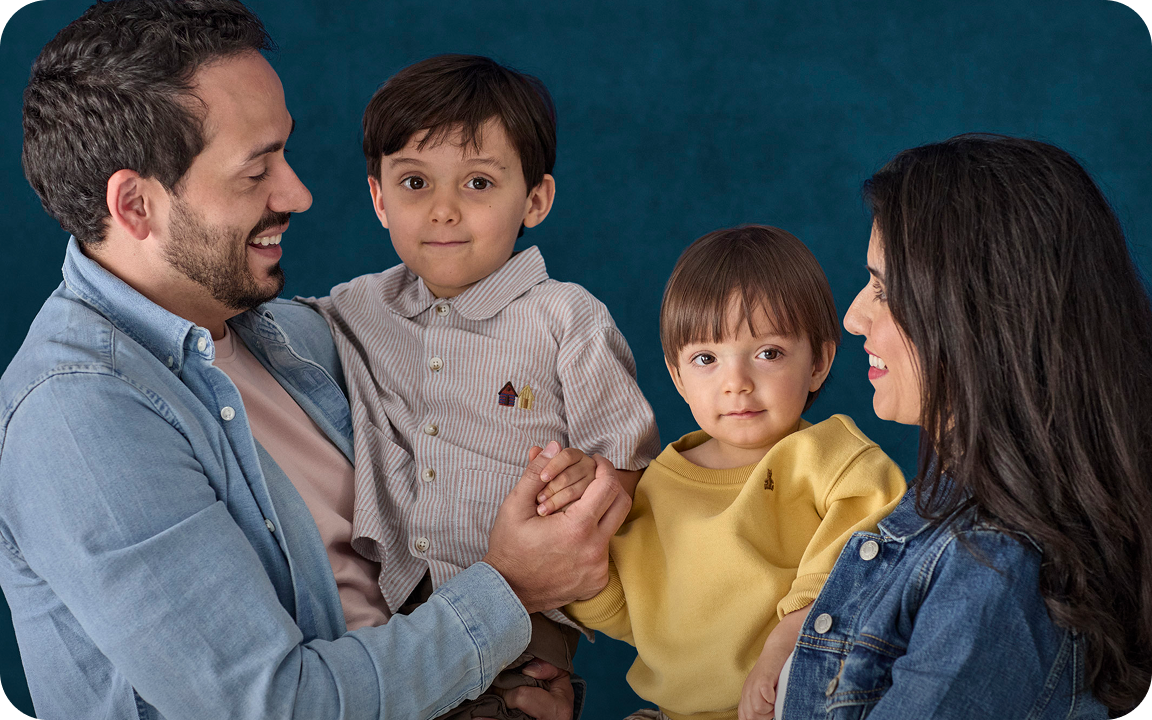
Luiz Felipe,
2 years old, living with infantile-onset NPC, and his family.
Finding the right support
Get connected to experienced care
A healthcare provider experienced in treating NPC can help guide next steps, answer questions, and support your child’s care.1
Treatment for NPC is advancing2
Understanding your treatment options can help you have informed conversations with your care team.1
References: 1. Hiwot T, Porter FD, Bremova-Ertl T, et al. 2025 Consensus Clinical Management Guidelines for Niemann-Pick Disease Type C. J Inherit Metab Dis. 2026;49(3):e70185. doi:10.1002/jimd.70185 2. Berry-Kravis E. Niemann-Pick Disease, Type C: diagnosis, management and disease-targeted therapies in development. Semin Pediatr Neurol. 2021;37:100879. doi:10.1016/j.spen.2021.100879 3. Pineda M, Mengel E, Jahnová H, et al. A suspicion index to aid screening of early-onset Niemann-Pick disease type C (NP-C). BMC Pediatr. 2016;16:107. doi:10.1186/s12887-016-0641-7 4. Geberhiwot T, Moro A, Dardis A, et al. Consensus Clinical Management Guidelines for Niemann-Pick Disease Type C. Orphanet J Rare Dis. 2018;13(1):50. doi:10.1186/s13023-018-0785-7 5. Patterson MC, Clayton P, Gissen P, et al. Recommendations for the detection and diagnosis of Niemann-Pick disease type C: an update. Neurol Clin Pract. 2017;7(6):499-511. doi:10.1212/CPJ.0000000000000399
Don’t miss what’s next in NPC treatment
Sign up to receive updates and resources that can help you understand NPC, decide what steps to consider next, and learn about new treatments under development.
Medical terms
- Inability to move the eyes up and down:
- Vertical supranuclear gaze palsy
- Difficulty moving the eyes up and down quickly (a cardinal sign of NPC):
- Vertical supranuclear saccadic palsy
- Enlarged spleen and/or liver:
- Hepatosplenomegaly
- Enlarged spleen:
- Splenomegaly
- Sudden muscle weakness brought on by emotion or laughter:
- Gelastic cataplexy